LiquidNFT: Redesigning a Multi-Chain NFT Marketplace Around Instant On-Chain Liquidity
Transforming a dense, transaction-heavy Web3 prototype into an award-winning discovery and liquidity marketplace serving 5,000+ monthly active traders.
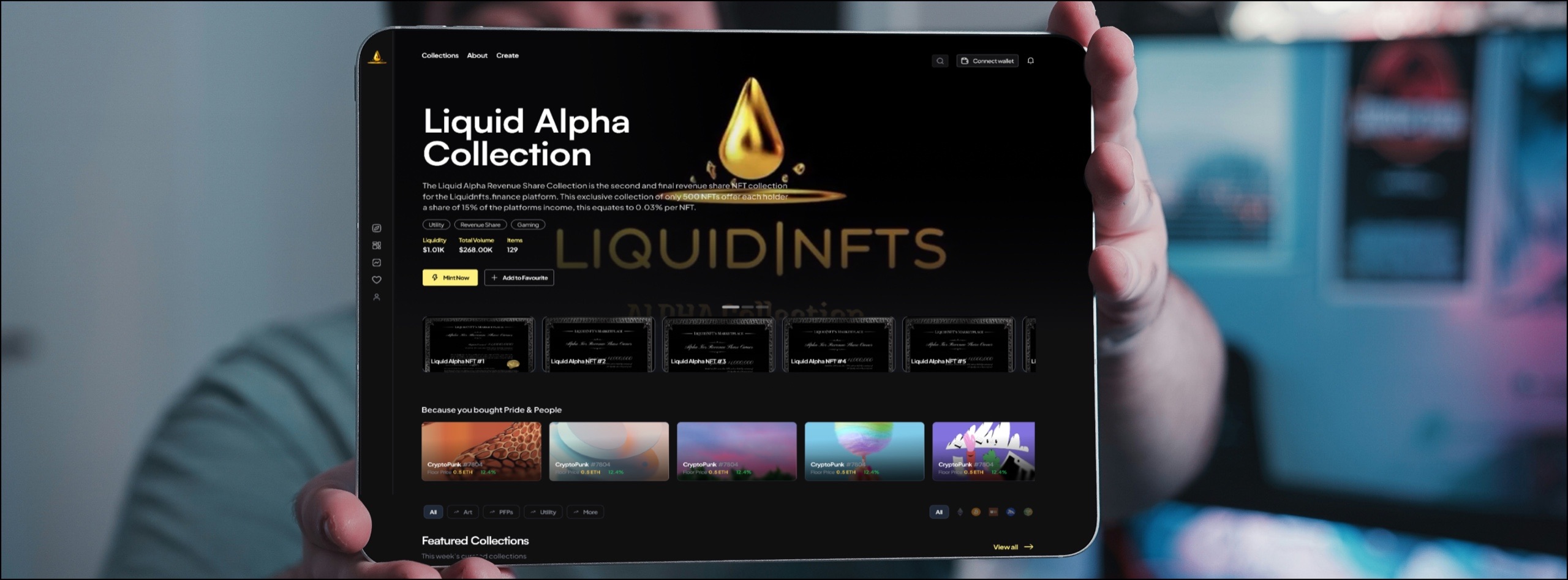
Transforming a dense, transaction-heavy Web3 prototype into an award-winning discovery and liquidity marketplace serving 5,000+ monthly active traders.
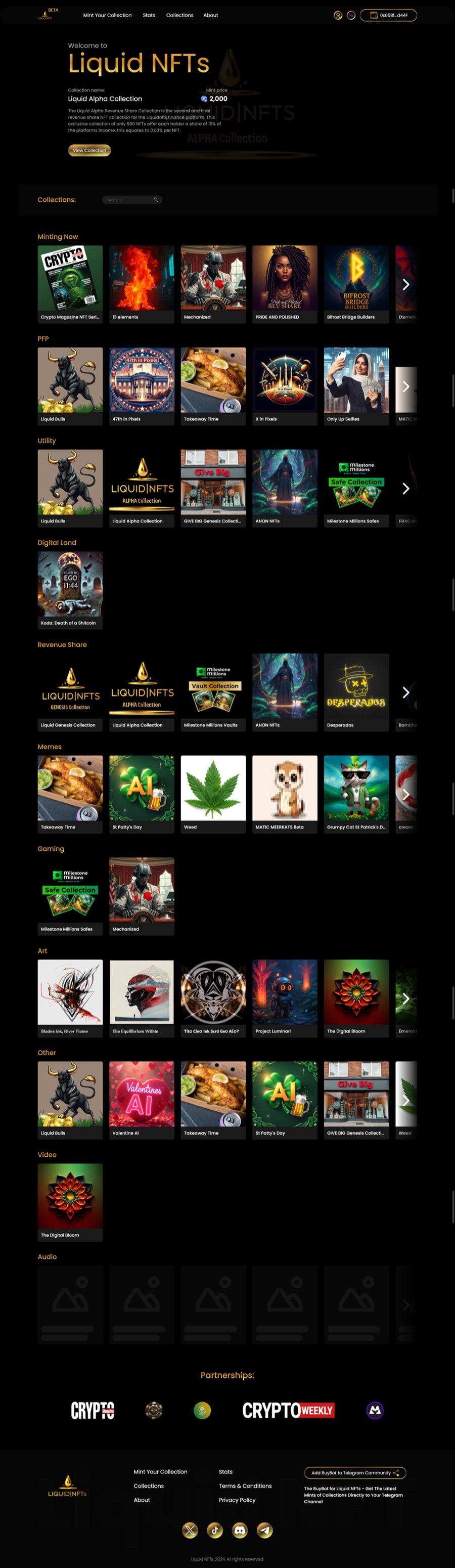
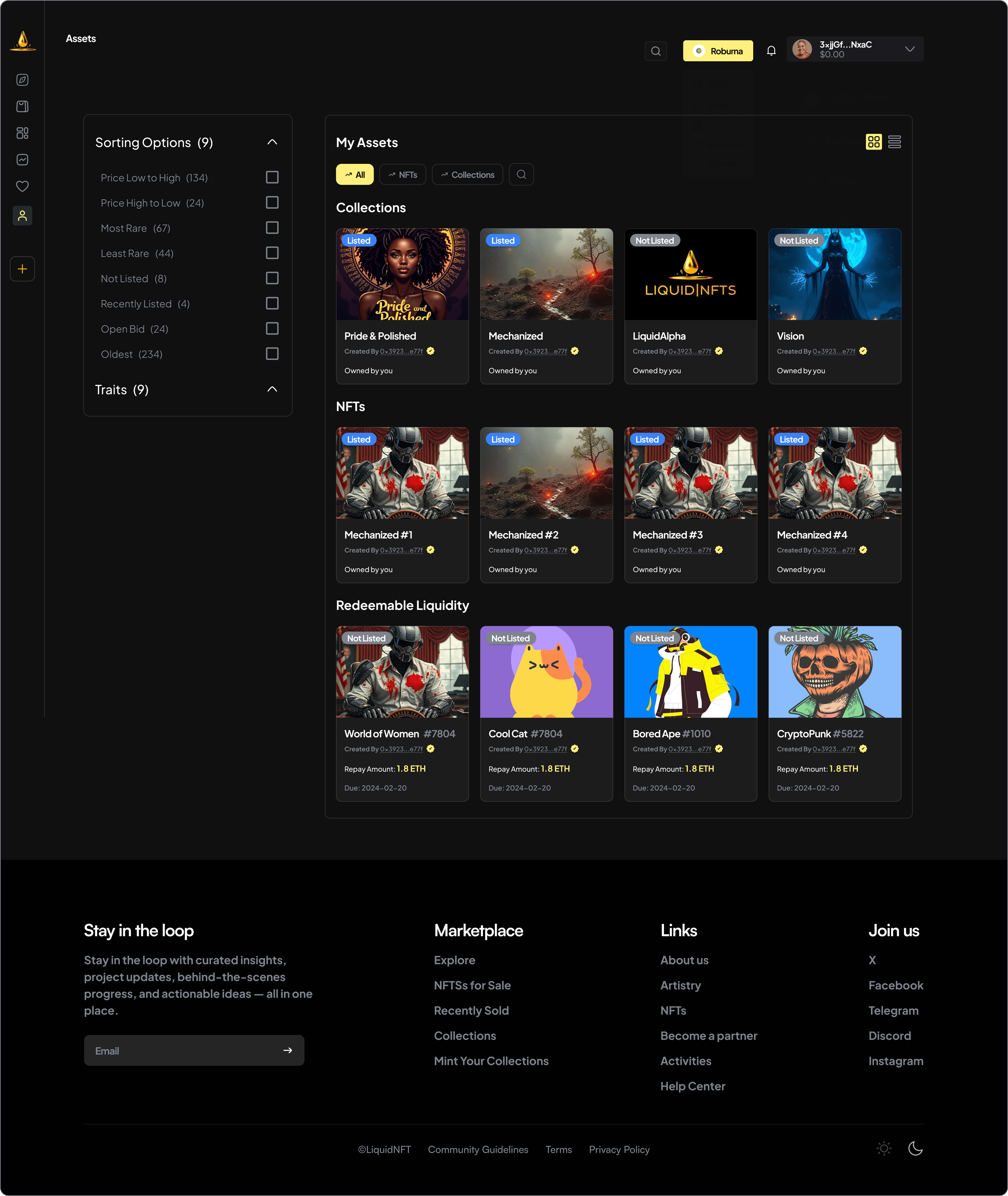
Standard NFT marketplaces lock collector capital into illiquid digital assets, forcing holders to wait indefinitely for matching secondary buyers. LiquidNFT solves this by backing every ERC-721 token with real, redeemable on-chain liquidity pools. However, the initial beta platform launched with crowded transactional sections, static data tables, empty visual rails, and buried liquidity metrics—obscuring the platform's core value proposition. As Lead Product Designer at Roburna Labs, I led the complete UI/UX overhaul across desktop and mobile, rebuilding the platform around streaming-inspired visual discovery, transparent on-chain valuation, and frictionless multi-chain trading.
Context & Audience
LiquidNFT sits at the intersection of Decentralized Finance (DeFi) and digital collectibles, providing tokens with programmatic, redeemable cash reserves in USD and FUSD. The ecosystem serves two primary user archetypes:
- Active Web3 Traders & Collectors: Prioritize real-time floor pricing, instant burn-to-redeem exit options, rarity scores, and multi-network mints.
- Creators & Launching Projects: Need expressive storefronts that display artwork prominently while managing automated royalty streams and live mint trackers.
The Legacy Baseline (The Starting Problem)
The initial beta suffered from three fundamental systemic flaws:
- The Core Advantage Was Buried: The platform’s defining differentiator—guaranteed, redeemable floor liquidity—was hidden in obscure sub-menus, making LiquidNFT look like an ordinary, unproven OpenSea alternative.
- Analytic Cognitive Overload: The interface resembled an internal accounting terminal rather than a cultural discovery engine. Text-heavy banners and lifeless tables alienated retail collectors.
- Multi-Chain Disconnection: Traders had to navigate disconnected prompts across five chains with inconsistent network feedback and high transaction drop-offs.
What We Discovered
Auditing the baseline release and conducting user testing with high-frequency Web3 traders led to four key realizations:
Dense data rows felt static; collectors had no visual cue of which projects had real momentum.
Replaced raw tables with streaming-style visual rails (Trending 1–10, Live Mints, Upcoming Drops).
Collectors hesitated to buy because calculating liquidation risk required manual math.
Implemented the Dual-Price Display (Immediate Floor vs. Redeemable Liquidity) on every asset card.
Users repeatedly bounced to external rarity tools to check attribute percentiles before placing bids.
Embedded standardized OpenRarity badges and trait weight percentages directly on the asset canvas.
Switching networks reloaded the full page, frequently clearing active filters and search results.
Created a persistent, global Chain Switcher supporting Ethereum, Polygon, BNB Chain, RBA, and BESC.
| Focus Area | Baseline Finding / Friction | Design Action Taken |
|---|---|---|
| Discovery Dynamics | Dense data rows felt static; collectors had no visual cue of which projects had real momentum. | Replaced raw tables with streaming-style visual rails (Trending 1–10, Live Mints, Upcoming Drops). |
| Downside Valuation | Collectors hesitated to buy because calculating liquidation risk required manual math. | Implemented the Dual-Price Display (Immediate Floor vs. Redeemable Liquidity) on every asset card. |
| Rarity Context | Users repeatedly bounced to external rarity tools to check attribute percentiles before placing bids. | Embedded standardized OpenRarity badges and trait weight percentages directly on the asset canvas. |
| Multi-Chain Ergonomics | Switching networks reloaded the full page, frequently clearing active filters and search results. | Created a persistent, global Chain Switcher supporting Ethereum, Polygon, BNB Chain, RBA, and BESC. |
The Decisions That Shaped the Product
Decision 1: A Streaming-Inspired Visual Architecture
The Challenge: Making complex financial instruments feel inviting, energetic, and visually compelling for art collectors.
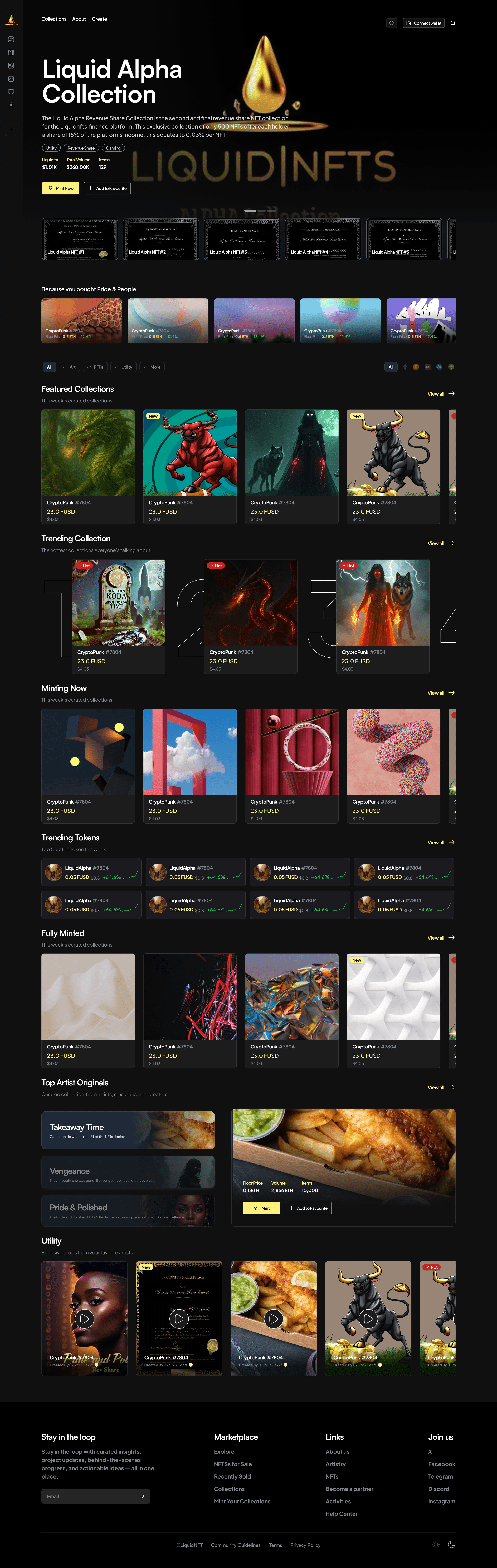
The Solution: Rather than mimicking quantitative DEX terminals (like Blur), I structured the homepage around dynamic discovery rails: a full-width hero drop showcasing floor and volume stats, followed by numbered top-10 trending lists and active mint trackers.
The Consequence: Reduced time-to-first-click by presenting projects as visually rich, live media cards while preserving key financial indicators below the fold.
Decision 2: The Dual-Price Liquidity Architecture
The Challenge: Proving that an NFT possessed real intrinsic downside protection without cluttering item cards.
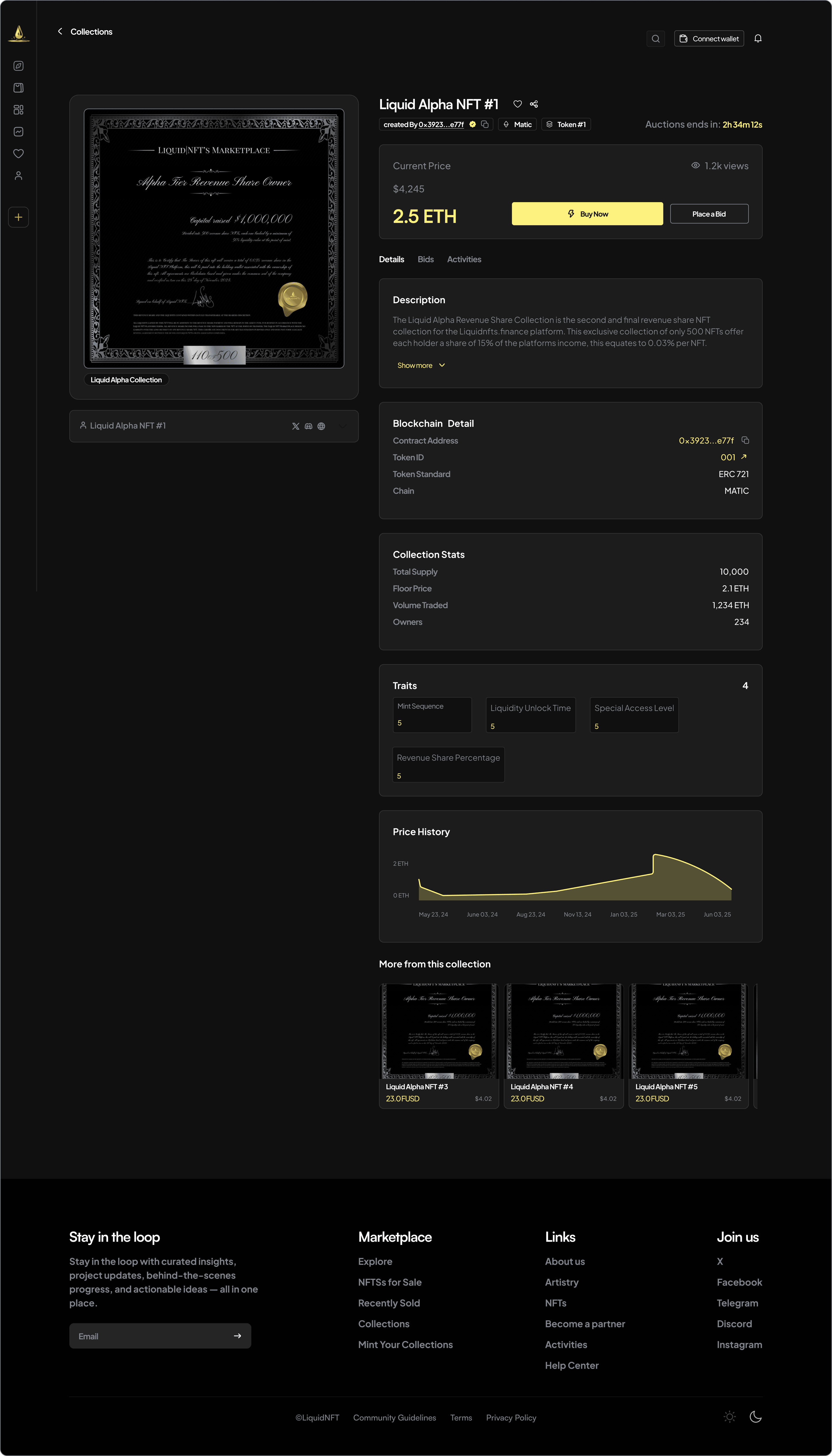
The Solution: Engineered a dedicated Dual-Price Metric: Top Primary Metric: Current Market Listing / Floor Bid. Bottom Secondary Accent: Instant Redeemable Liquidity Pool Value + % to Full Liquidity Bar.
The Consequence: Removed transaction anxiety; collectors could immediately identify the exact liquidation backstop before placing bids or minting tokens.
Decision 3: Modular Tab Architecture for Collection Pages
The Challenge: Collectors need rapid floor sweeps, while project analysts require wallet holder distribution and transaction logs.
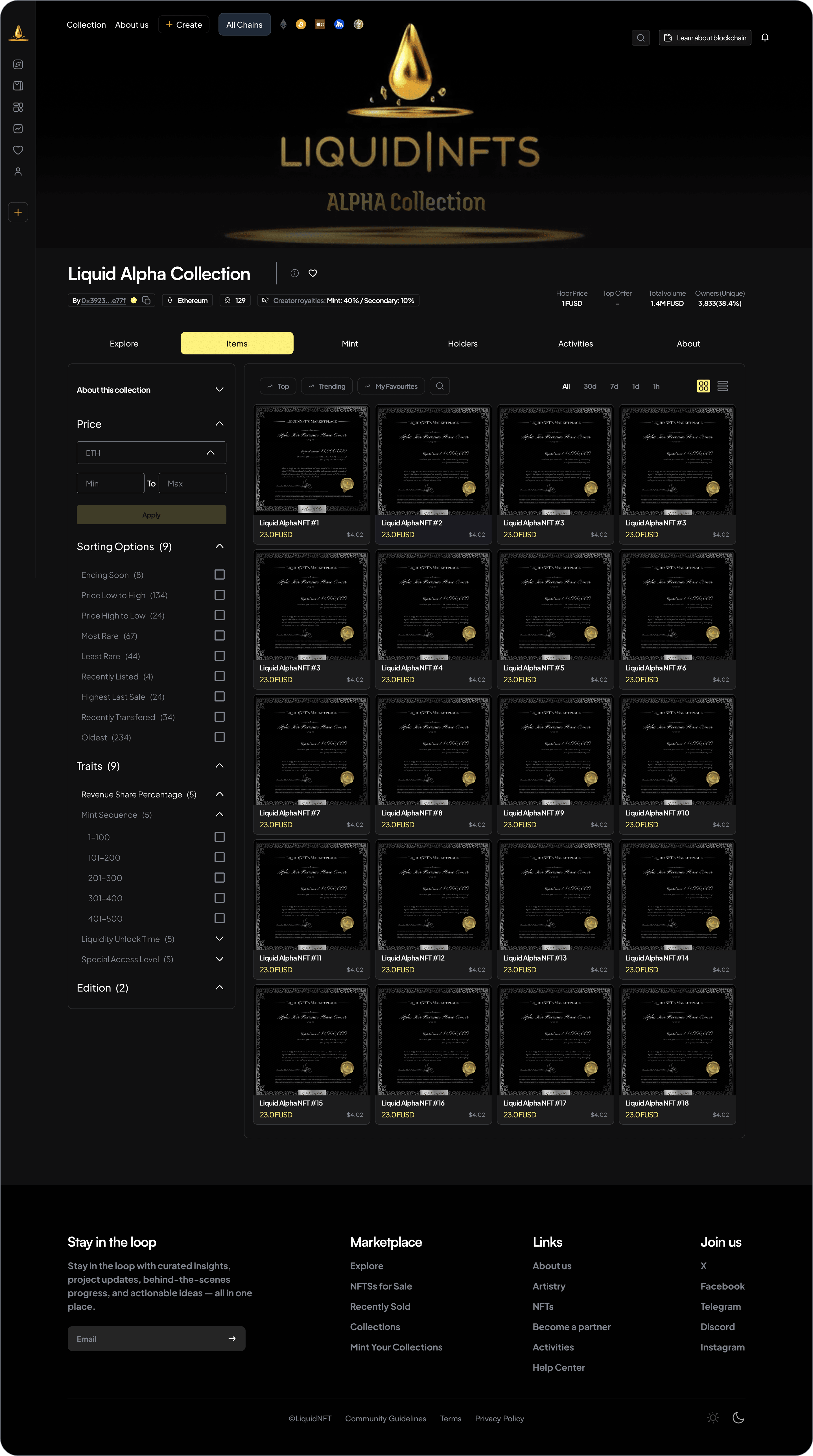
The Solution: Rebuilt collection hubs around five decoupled tab surfaces: Items (with granular trait sidebars), Mint (launch milestones), Holders (distribution metrics), Activities (live contract history), and About (project provenance).
The Consequence: Dramatically improved page performance, eliminated layout shifting, and streamlined floor purchasing.
From Design to a Working Product
[Global Header Node] (Chain Switcher: ETH · Polygon · BNB · RBA · BESC)
│
┌───────────────────────┴───────────────────────┐
▼                                               ▼
[Discovery Storefront]                          [Collection Hub]
├─ Featured Hero Drop                           ├─ % to Liquidity Indicator
├─ Numbered Trending 1-10 Rails                 ├─ Modular Tabs (Items, Mint, Activity)
└─ Real-Time Minting Feeds                      └─ OpenRarity Trait Filters
                                                │
                                                ▼
                                                [Item Detail Surface]
                                                ├─ Dual-Price Engine (Market vs Liquidity)
                                                ├─ Action Bar (Buy Floor, Bid, Redeem)
                                                └─ On-Chain Provenance Log
1. Tokenized Dark System Architecture
- Base Surfaces: Neutral deep blacks (#0A0A0A, #121212, #1A1A1A) designed to make neon and high-saturation NFT artwork take visual priority.
- Semantic Tonal Palette: Active Mint (Emerald Green), Liquidity Backing (Liquid Gold/Amber), Price Discrepancies (Crimson), and Network Identifiers (Cyan).
- Monospaced Numeral Scaling: Applied across all currency balances, token IDs, and gas estimators to eliminate layout jitter during high-frequency price updates.
2. Frontend Engineering Collaboration
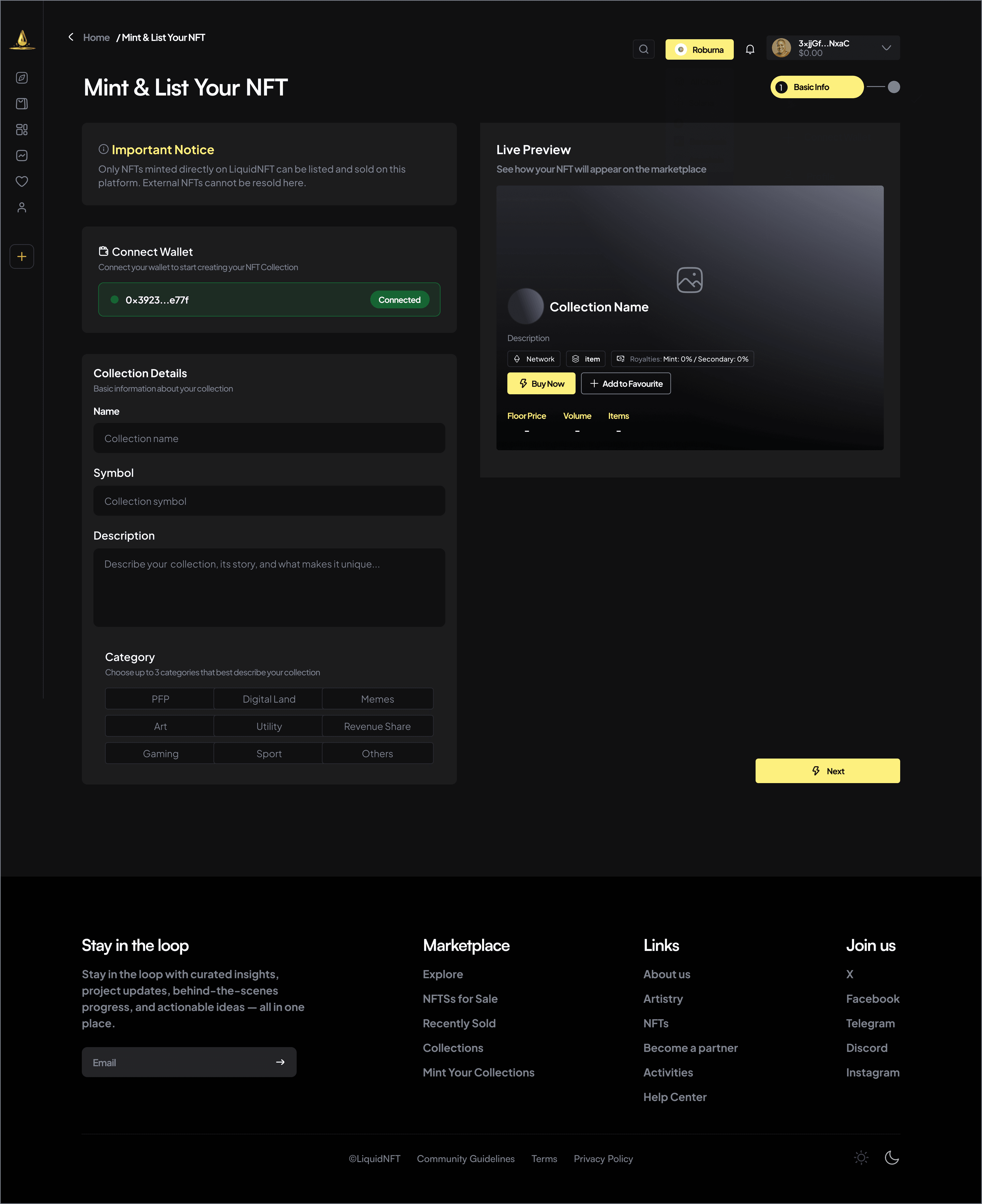
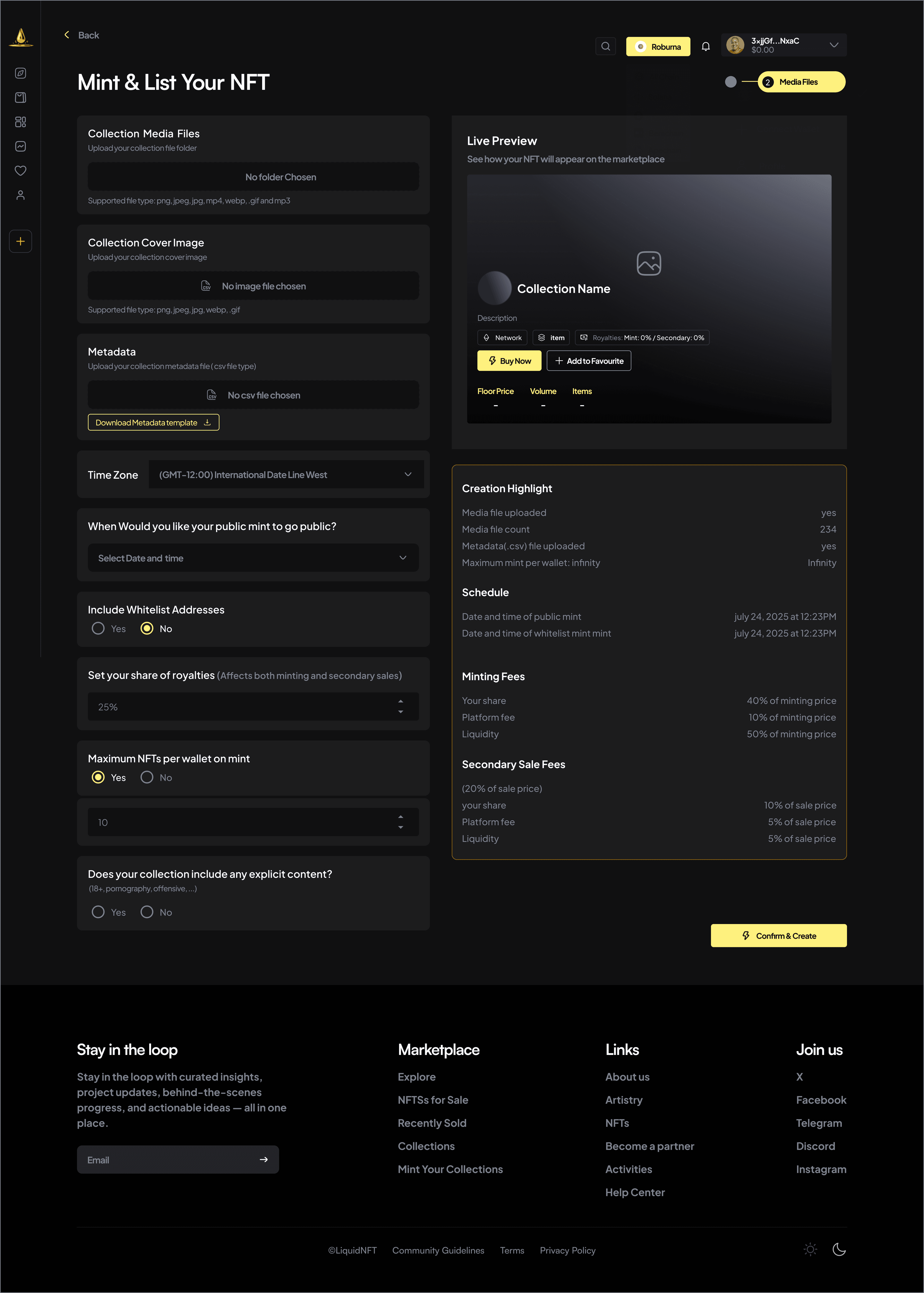
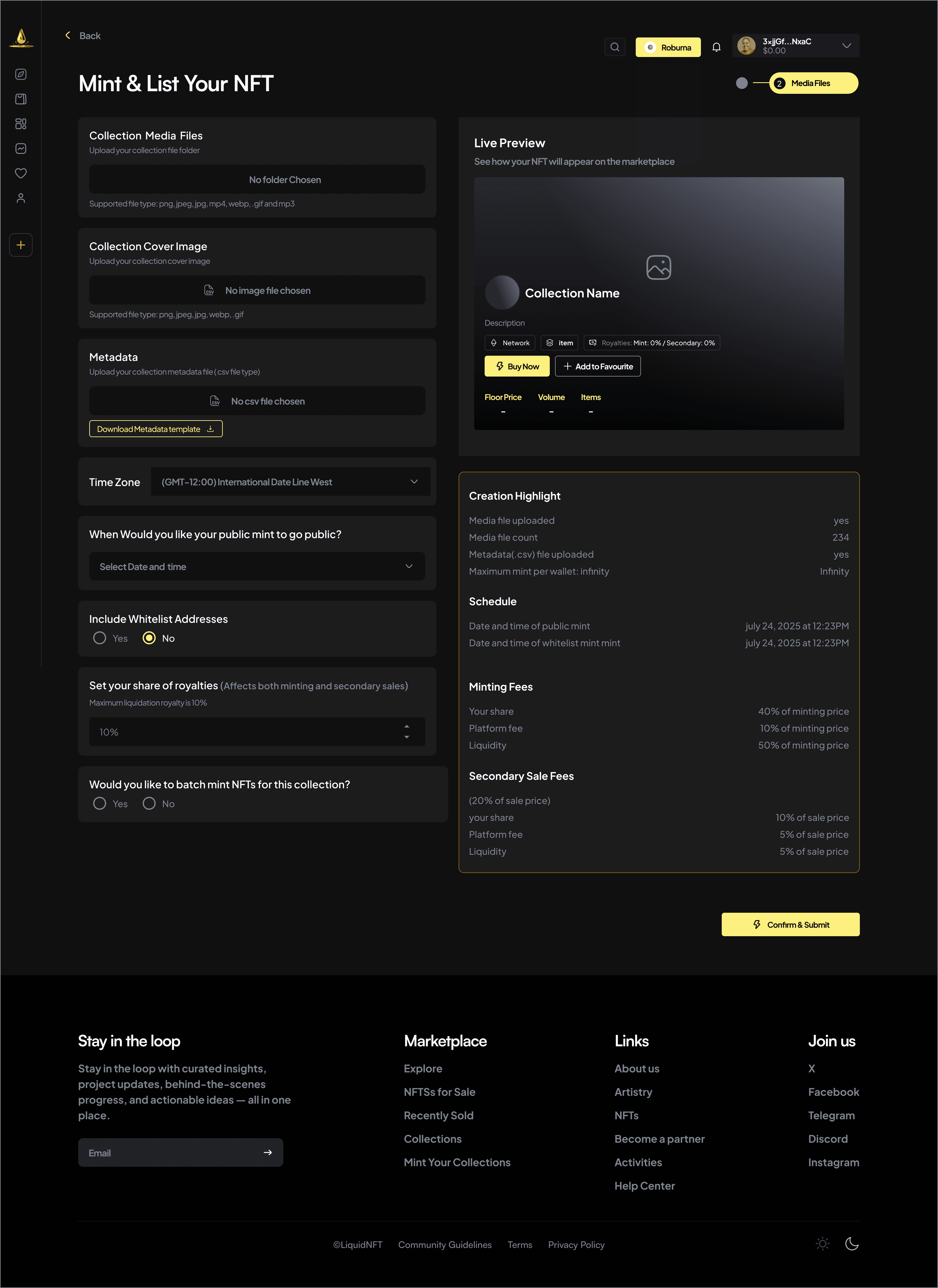
- Built modular auto-layout component kits in Figma with explicit hover, active, disabled, loading, and error states.
- Worked directly alongside frontend and Web3 engineers building on React, Vite, and Tailwind CSS to verify instant chain hydration, wallet signature modals, and sub-second asset filtering.
The Final Experience
1. The Discovery Storefront
Intent: Bring visual momentum, clarity, and instant liquidity cues to the first 10 seconds of user browsing.
Design Solution: A high-contrast hero showcasing the primary featured collection drop, accompanied by live volume, floor pricing, and minted supply. Curated visual rails (Numbered 1–10 Trending, Minting Now, and Upcoming Drops) guide collectors into active communities.
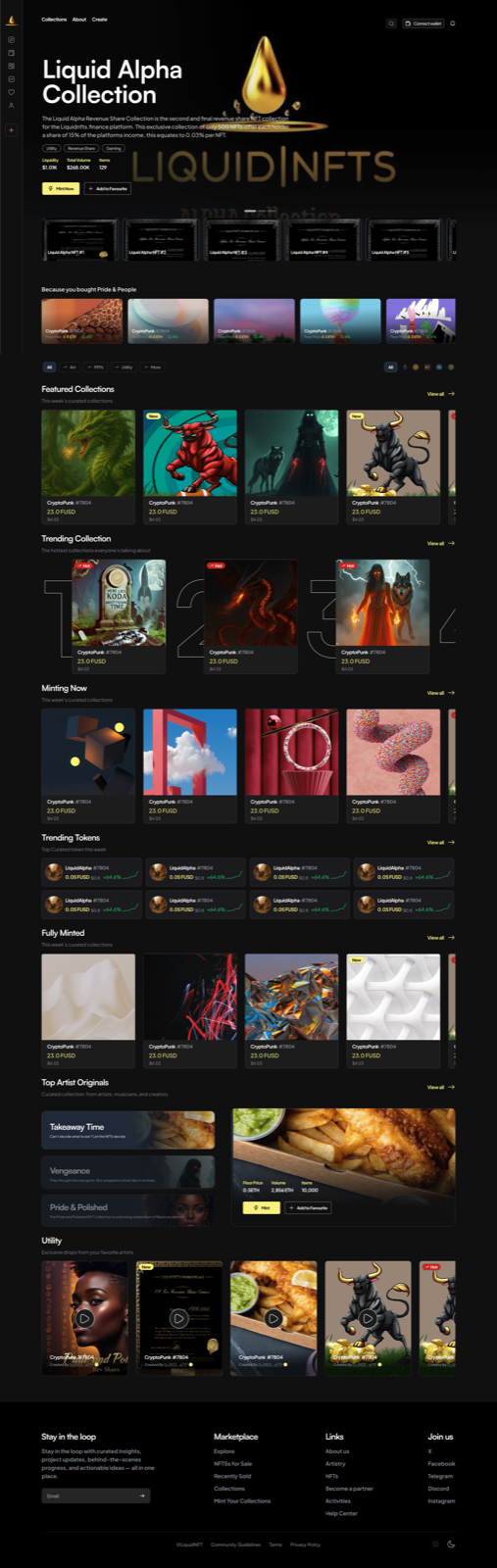
The redesigned Discovery Storefront: Replacing static data tables with streaming-style discovery rails and live drop momentum.
2. The Comprehensive Collection Hub
Intent: Equip serious traders with institutional-grade filtering tools and immediate liquidity visibility.
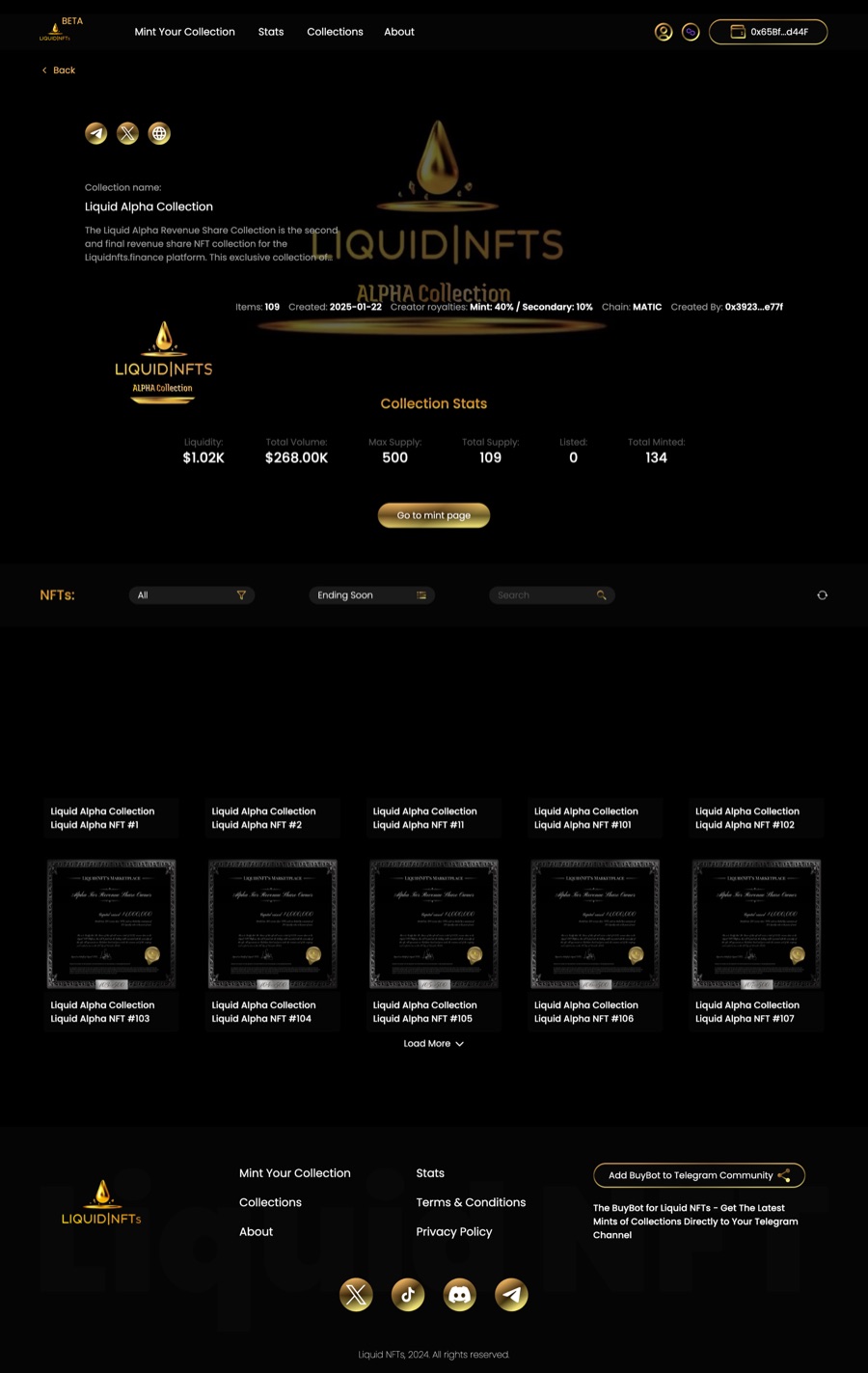
Design Solution: Clean project header featuring verified badges, floor price, volume, and the signature % to Liquidity indicator. Users seamlessly toggle between fast floor-sweeping grids and live minting schedules without full-page reloads.
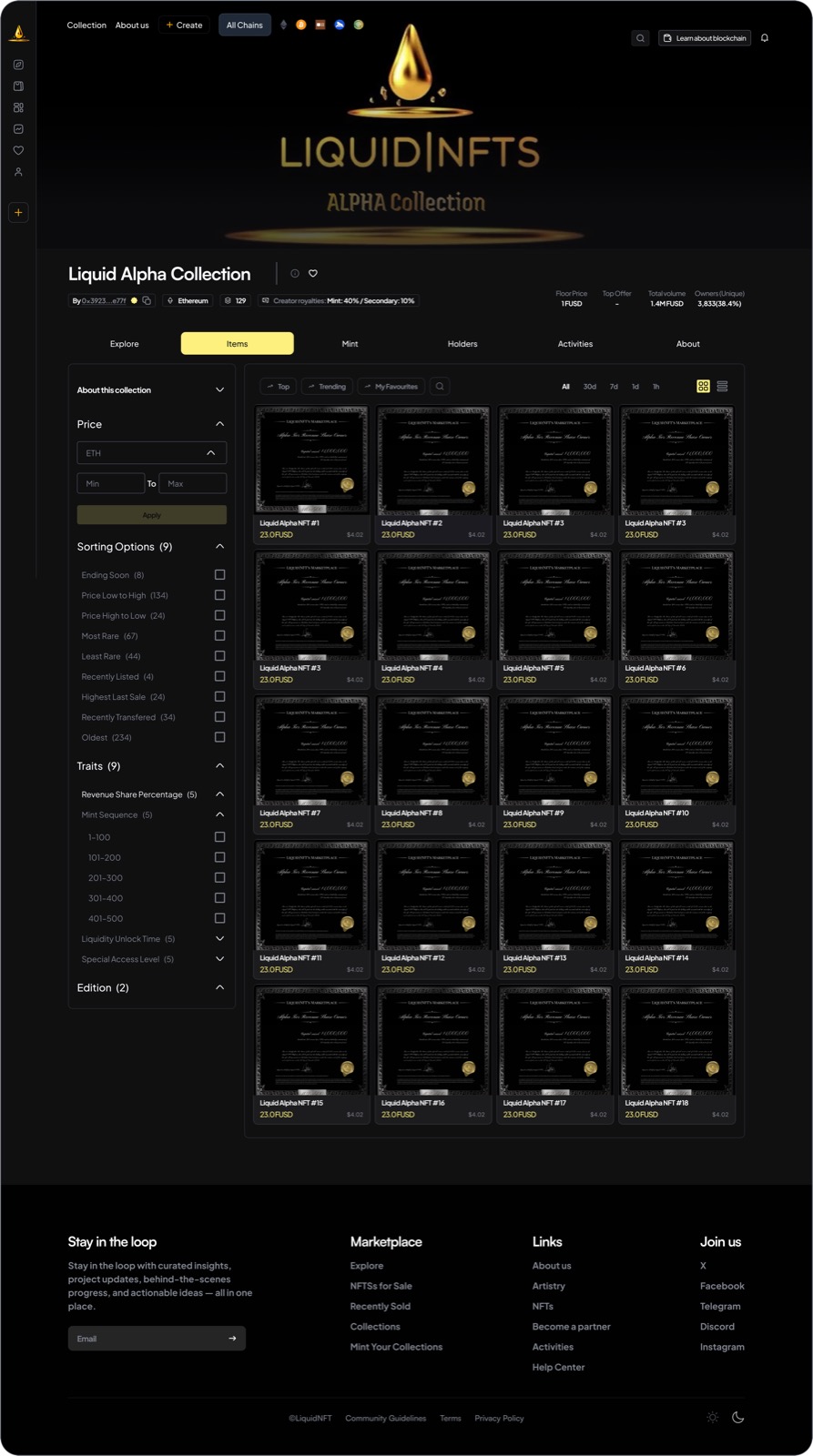
Collection Hub: Modular tab architecture housing item filters, live mint schedules, and real-time liquidity backing.
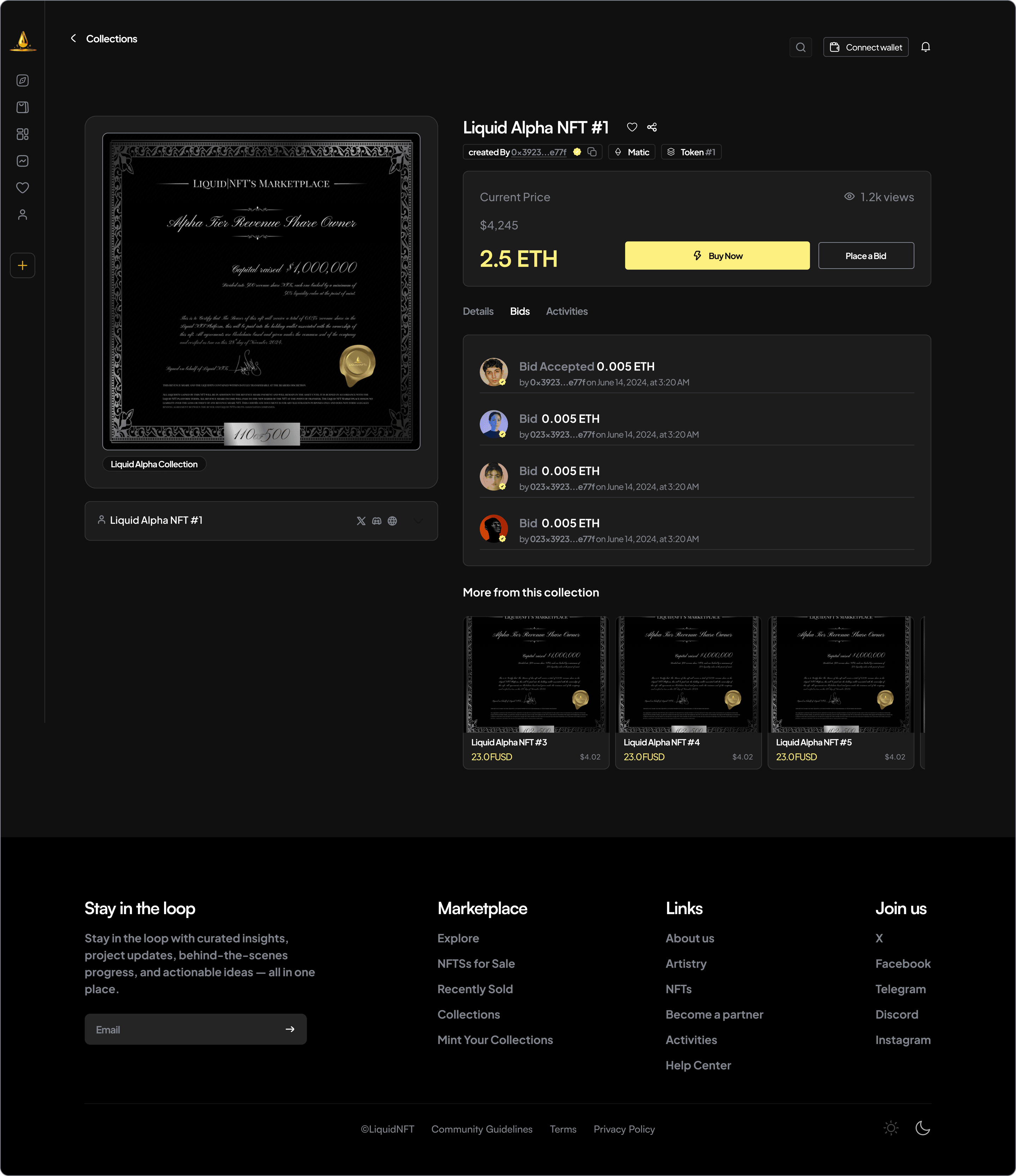
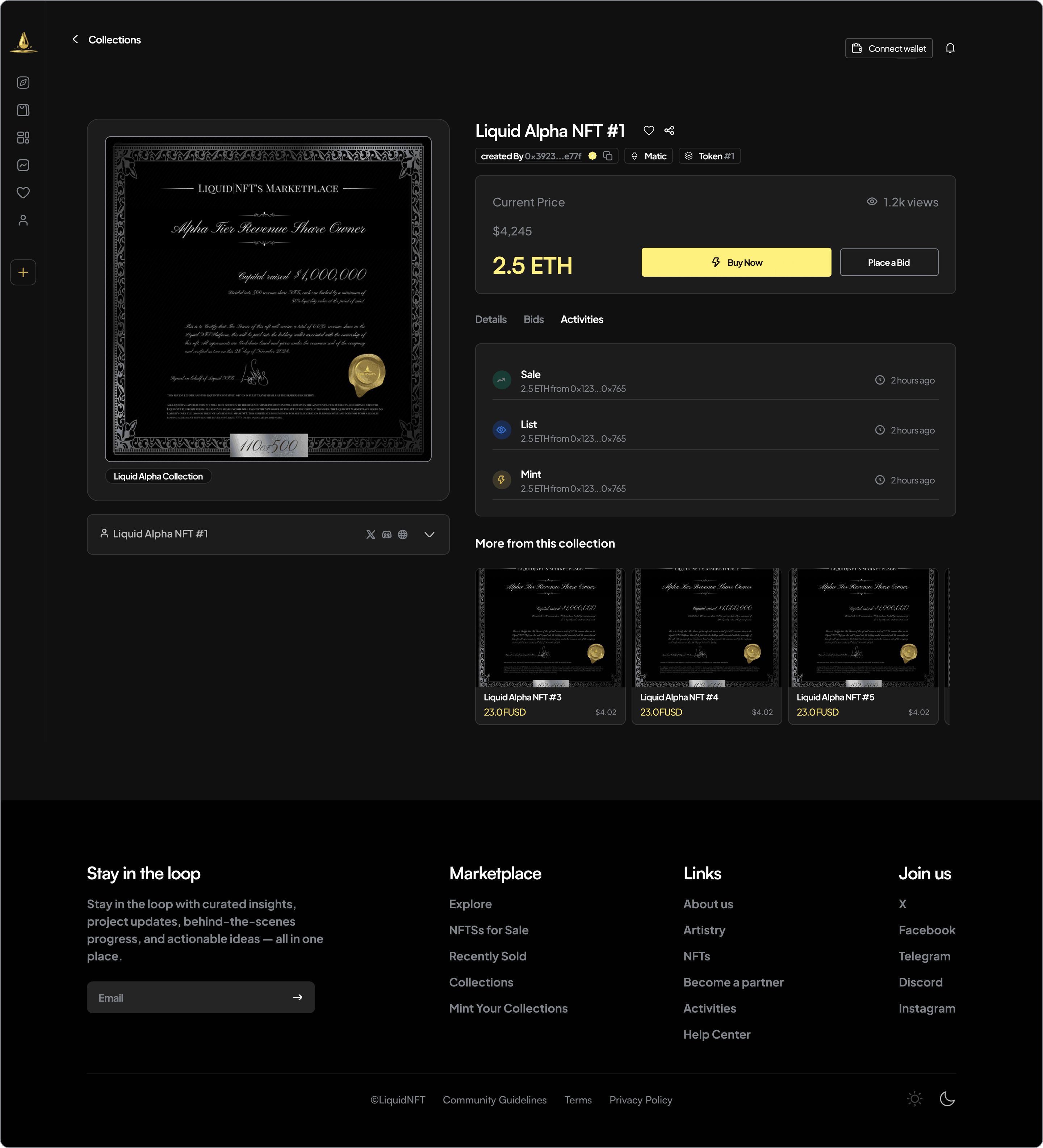
3. The Multi-Action Item Trading Interface
Intent: Enable confident acquisitions, bids, and instant on-chain liquidations on a single surface.
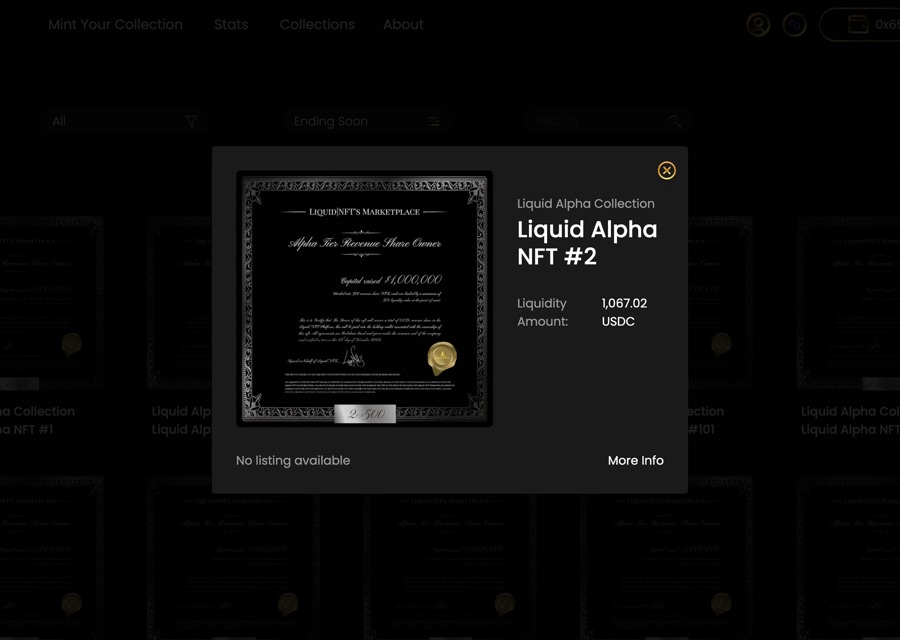
Design Solution: The asset canvas displays OpenRarity badges alongside the Dual-Price Box. Traders can execute instant floor purchases, submit tailored offers, or initiate a 1-click on-chain liquidity burn directly from the primary action bar.
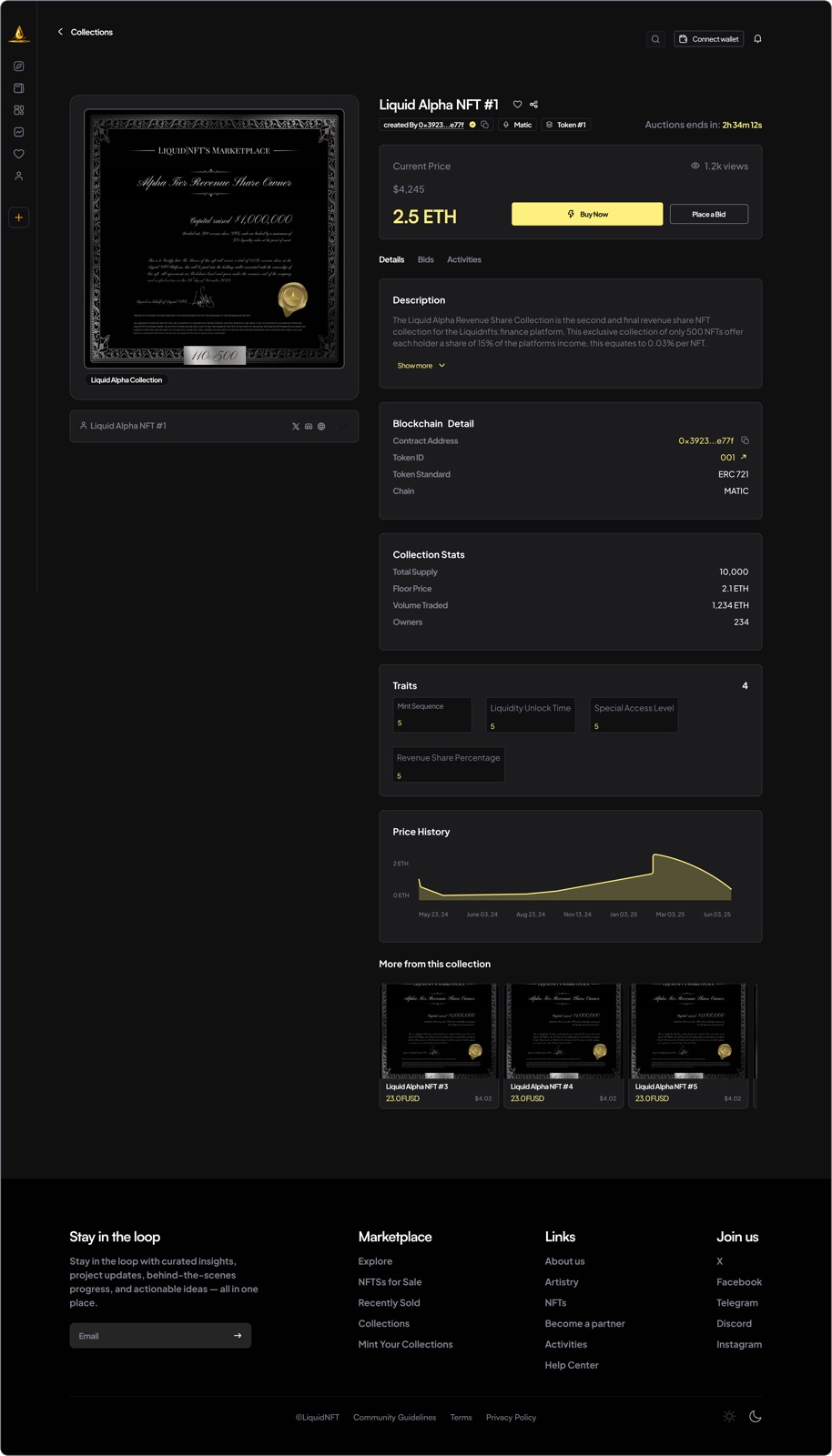
Item Trading Node: Transparent dual-pricing (Market Floor vs. Guaranteed Liquidity) with 1-click execution actions.
The Impact
Following production deployment across all five networks, LiquidNFT saw significant trading adoption and formal industry recognition:
Scaled active community trading across Ethereum, Polygon, BNB Chain, RBA, and BESC.
Formally recognized with top honors in two enterprise categories: Winner: Web3 Liquidity Innovation 2026 and Winner: Next-Generation NFT Infrastructure 2026.
Unified multi-chain navigation into a single persistent header, dropping network-switching drop-offs to zero.
Retained traders within the purchase checkout funnel by surfacing real-time attribute weights and OpenRarity scores natively.
Key Takeaways
DeFi Needs Consumer-Grade Mental Models
Backing digital assets with real liquidity pool reserves is a powerful value proposition, but it fails if hidden inside complex charts. Translating liquidity into simple visual backstops made the product click for mainstream collectors.
Audit Collages Beat Repetitive Comparisons
Presenting all 5 legacy screens as a concise, scrollable audit baseline gave stakeholders a fast snapshot of the project scope without forcing them through tedious side-by-side comparison fatigue.
Chain Complexity Must Disappear
Users care about finding artwork and accessing safe liquidity—not configuring RPC network endpoints. A unified header switcher removed technical friction and smoothed the path to purchase.